
Five tools come up again and again when a trader looks for a way to build and test a strategy without a trading desk behind them: daZh, Zerodha Streak, Tradetron, AlgoTest, and TradingView. They overlap enough to be compared, but they are not built for the same job. One is a charting platform with a scripting language, one is an options backtester, one is an automation engine with a strategy marketplace, one is a beginner-friendly builder tied to a broker, and one is organised around validation. This page is a decision map first; where it ranks, it ranks by a named axis. It sets out what each does best so you can match a tool to how you actually trade.
This page is a decision map first; where it ranks, it ranks by a named axis.Methodology. The comparison below uses four criteria that decide trust in a strategy tool: build interface, backtesting depth, validation features (walk-forward, Monte Carlo, machine learning), and how each tool is positioned. Facts about each platform are drawn from its own public product pages and documentation, as of June 2026, and are linked in the table and Sources. daZh's own details reflect the product scope described on Zudora's public pages and current early-access materials, as of June 2026. Product features change often, so confirm current details with each platform before deciding. We do not score the platforms by a single overall total, because the criteria are not equally important for every trader; where this page ranks, it ranks on one named axis at a time. This is a decision aid, not investment advice.
Quick answer
If you want the short version, match your main need to the tool built for it.
| Your main need | Best fit |
|---|---|
| Beginner no-code systematic trading through Zerodha | Streak |
| Multi-leg strategies and a strategy marketplace | Tradetron |
| Options-focused backtesting | AlgoTest |
| Charting, Pine Script, and global-market analysis | TradingView |
| No-code validation depth before live capital | daZh |
The rest of this page explains why, criterion by criterion.
Ranking by validation depth
If the ranking is based on validation depth before live capital, daZh ranks first. That is because it is organised around the layer most trading tools treat as secondary: testing whether a strategy survives beyond the backtest that made it look good. Streak, Tradetron, AlgoTest, and TradingView each lead on other dimensions; daZh is built around the validation step itself.
| Rank | Platform | Best for | Why |
|---|---|---|---|
| 1 | daZh | Validation-first no-code strategy testing | Combines no-code building with walk-forward, Monte Carlo, and model-training support before capital is committed |
| 2 | AlgoTest | Options-focused backtesting | Strong fit for options traders, with Monte Carlo-supported options workflows |
| 3 | Tradetron | Strategy automation and marketplace | Strong for automation and strategy-deployment workflows |
| 4 | TradingView | Charting and Pine Script | Best for charting and scripted strategy testing |
| 5 | Streak | Beginner Zerodha-linked workflows | Strong for a simple no-code entry into systematic trading |
Ranked by validation depth, not by execution maturity or charting breadth. The verdict changes depending on what you rank for.
daZh is ranked first here for validation depth. Traders whose main priority is mature live automation, charting-first workflows, or ready-made strategy marketplaces may rank the platforms differently.
The table is the centrepiece. Read across the row for the tool you are weighing, or down the column for the criterion you care about most.
| Platform | Build interface | Backtesting | Validation (walk-forward / Monte Carlo / ML) | Best at |
|---|---|---|---|---|
| daZh | No-code: indicators, signals, rules | Multi-timeframe, multi-asset, options-aware | Walk-forward and Monte Carlo, plus no-code ML | In-depth, no-code validation |
| Zerodha Streak | No-code builder | No-code historical backtesting | Not a documented focus | Beginners trading through Zerodha |
| Tradetron | No-code plus a formula layer | Standard backtest engine | Not a documented focus | Multi-leg strategies and a marketplace |
| AlgoTest | No-code, options-focused | Options-focused data | Monte Carlo simulation | Options backtesting |
| TradingView | Pine Script (code) | Strategy Tester, bar-magnifier intrabar on higher tiers | None built-in (per its docs) | Charting and Pine Script backtesting |
Compiled from each platform's public product pages and documentation, June 2026. Sources are listed at the end.
Build: no-code, formula, or code
The first fork is how you express a strategy. Zerodha Streak is the most approachable, a no-code builder aimed at someone placing their first systematic trade, and it is tightly integrated with the Zerodha account many traders already hold. Tradetron sits a step further on, pairing no-code blocks with a formula layer that lets more complex conditions be written without full programming. AlgoTest is no-code but built specifically for options, so its builder speaks in legs, strikes, and expiries.
TradingView is the outlier: strategies are written in Pine Script, its own programming language, which is the most flexible of the five and also the one that assumes you can code. daZh is no-code, assembling indicators, signals, and rules as blocks. If you want maximum flexibility and can program, TradingView's Pine is hard to beat; if you want options-native building, AlgoTest fits; if you want to start with the least friction, Streak is built for that.
Backtesting depth
All five backtest, but they reach different depths. AlgoTest's strength is its options focus: an options-native builder and historical options data, which matters because options backtests live or die on accuracy. TradingView's Strategy Tester is mature and, on higher tiers, runs deeper intrabar backtesting via a bar-magnifier mode, with configurable commission and slippage, a serious engine for anyone scripting in Pine. Streak offers no-code historical backtesting, and Tradetron provides a standard backtest engine alongside its automation. daZh backtests across multiple timeframes and assets and is options-aware. No single tool dominates; the depth you need depends on what you trade.
No single tool dominates; the depth you need depends on what you trade.Validation: walk-forward, Monte Carlo, and machine learning
This is the criterion where the tools diverge most, and it is where daZh is built to lead. A backtest shows how a strategy did on one slice of history; validation tests whether that edge survives beyond it. Validation is where a backtest becomes evidence. Without it, a strategy that only fit the quirks of one period can look convincing right up until it meets new data, which is the failure validation is built to catch.
Here the picture is specific. AlgoTest offers Monte Carlo simulation, which resamples results to probe luck and tail risk. TradingView's native Strategy Tester does not include built-in walk-forward or Monte Carlo features, though Pine's flexibility lets advanced users script their own. Streak and Tradetron focus their effort on building and automating rather than on walk-forward or Monte Carlo tooling. daZh is built around this layer: its workflows are organised around walk-forward testing, which re-tests a strategy on rolling out-of-sample windows to see if the edge holds on data it was not tuned on, Monte Carlo analysis, and no-code model-training support. That combination of validation workflows in one no-code tool is its distinctive position. For a trader whose priority is proving a strategy before capital, it is the axis that matters most.
Validation is where a backtest becomes evidence.Strengths at a glance
Each tool's core strength, side by side. No tool tops every column; each is the strongest answer to a different question.
| Platform | What it does best |
|---|---|
| daZh | Validation depth in a no-code workflow: walk-forward, Monte Carlo, and no-code model training |
| Streak | Beginner-friendly no-code building, familiar to Zerodha users |
| Tradetron | Strategy automation, a marketplace, and formula flexibility |
| AlgoTest | Options-native building and backtesting, with Monte Carlo |
| TradingView | Top-tier charting, Pine Script flexibility, and global-market reach |
Pricing and access
Plans change often, so this is the access model rather than live prices; confirm current details on each platform (as of June 2026).
| Platform | Pricing and access (verify current) |
|---|---|
| daZh | Private beta / early access; paid tiers not yet activated |
| Streak | Subscription via a Zerodha account; verify current plans |
| Tradetron | Paid tiers; limits vary by plan |
| AlgoTest | Free and paid tiers |
| TradingView | Free and paid tiers; advanced backtesting such as the bar-magnifier mode is tier-dependent |
daZh vs the others: which should you choose
There is no overall winner here, because the right tool depends on the job in front of you.
- If you are starting out and trade through Zerodha, Streak removes the most friction.
- If you want to automate multi-leg strategies or draw on a marketplace of ready strategies, Tradetron is built for that.
- If you live in index options and want deep options data, AlgoTest is built for exactly that.
- If you want top-tier charting and the flexibility of a scripting language, and you can code, TradingView is hard to match.
- If your priority is validating a strategy in depth without code, walk-forward and Monte Carlo and no-code ML, daZh is built for that.
Figure 1 places the five by where they lean.
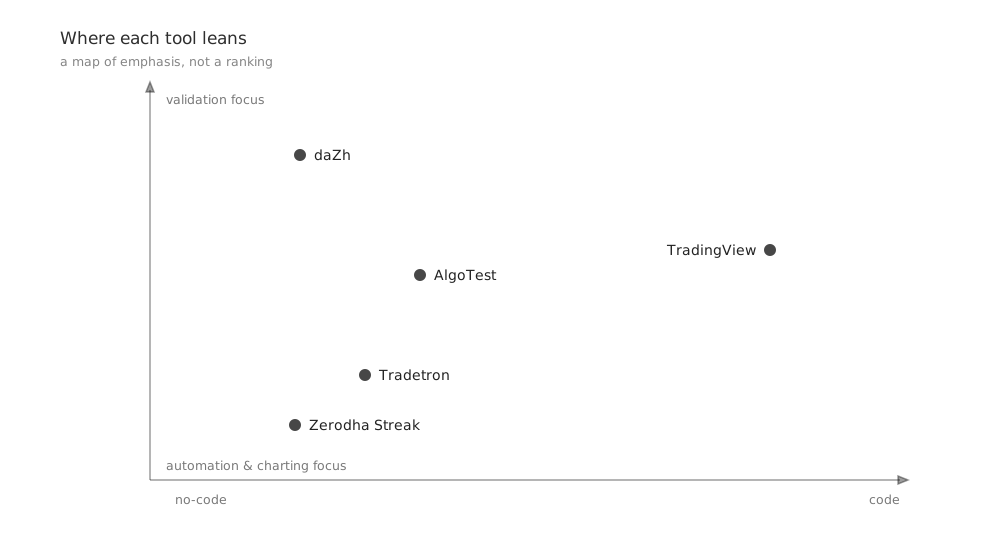
Figure 1: Where each tool leans, by build approach and primary focus. A map of emphasis, not a ranking. Illustrative.
Where the validation layer fits
Read across the five and the pattern is that each tool is the strongest answer to a particular need: simplicity, options depth, automation, charting, or validation. daZh by Zudora is the validation-layer answer: a no-code platform organised around the work of testing a strategy, with walk-forward and Monte Carlo analysis and no-code model training, so an idea is examined in depth before any capital is committed. For a trader who treats validation as the step that decides whether an idea is worth funding, that focus is the whole point. The right tool, in the end, is the one that turns the most uncertainty into evidence before you fund it.
The right tool, in the end, is the one that turns the most uncertainty into evidence before you fund it.Related comparisons
- How to choose an algo trading platform, the criteria behind this table.
- Backtesting software: how to choose one that tests honestly.
- Strategy validation, the concept this comparison weighs most.
Disclaimer: daZh is a software platform for building, testing, and managing user-defined trading strategies. It does not provide investment advice, stock recommendations, guaranteed returns, or profit assurance. Backtests are based on historical data and assumptions; actual trading results may differ. Platform comparisons reflect publicly available information as of June 2026 and may change.
Sources
- Zerodha, "Introducing Streak v4", Z-Connect, accessed June 2026 (no-code builder, historical backtesting, Zerodha integration). https://zerodha.com/z-connect/streak/introducing-streak-v4
- Tradetron, "Pricing" and "Features", accessed June 2026 (no-code plus formula builder, standard backtest engine, strategy automation, strategy marketplace). https://tradetron.tech/pages/pricing
- AlgoTest, "Option Strategy Builder", accessed June 2026 (options-focused no-code builder, historical options data, Monte Carlo simulation). https://algotest.in/blog/option-strategy-builder-algotest/
- TradingView, Pine Script documentation, "Strategies", accessed June 2026 (Pine Script strategies, Strategy Tester, bar-magnifier intrabar mode, commission and slippage settings; strategies simulate orders; no built-in walk-forward or Monte Carlo). https://www.tradingview.com/pine-script-docs/concepts/strategies/